
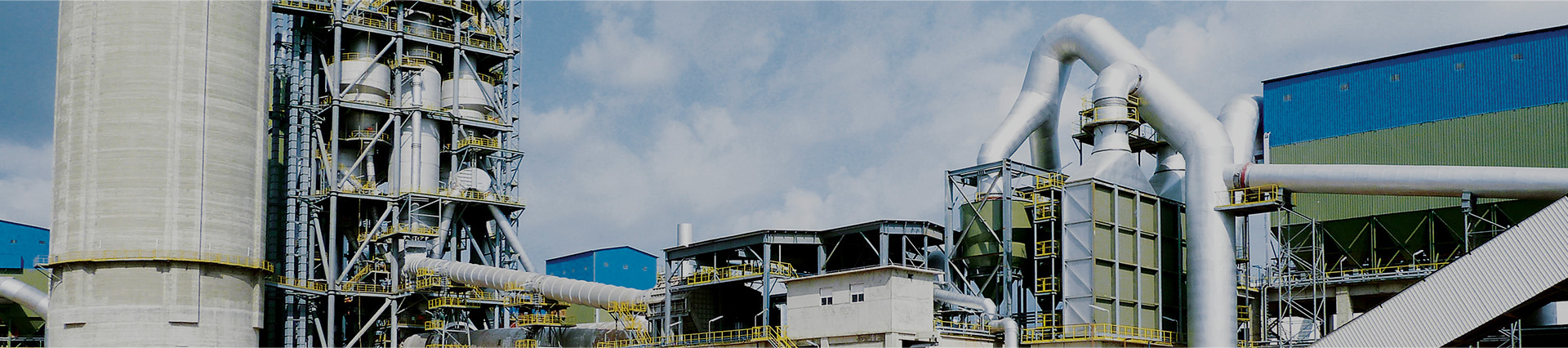
Mechanical Vertical Shaft Kiln
What Is a Mechanical Vertical Shaft Kiln?
Optimized Design
Differential Discharging Technology
Larger Diameter
5 m - 8 m
Improved Sintering Effect
High & Stable Cement Product Quality
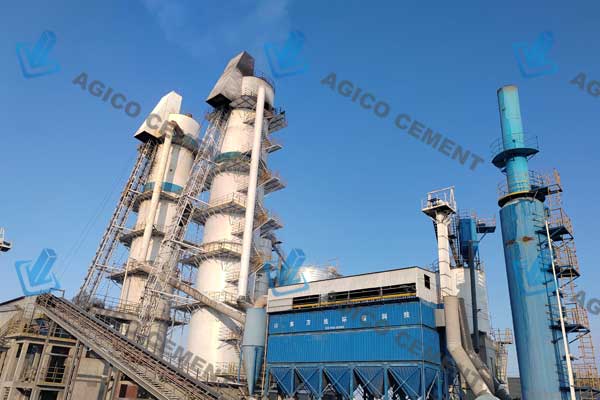
Introduction: A traditional mechanical vertical shaft kiln is a calcination equipment featuring a fixed vertical structure; it utilizes mechanized feeding and discharging to produce cement clinker continuously. The auto-feeding and discharging are the major features that distinguish it from traditional vertical kilns that rely on manual labor. It's been a long time since traditional vertical kilns could meet the modern cement industry standards regarding production efficiency, energy consumption, environmental impact, and product quality.
This new type of mechanical vertical cement shaft kiln offered by AGICO is an upgraded model employing innovative differential discharging technology to achieve more uniform airflow and material discharge; it is designed to address inherent flaws—such as the "wall effect".
The mechanized vertical kiln retains a direct heat transfer method—characterized by high efficiency—and its simple firing process, in which pulverized coal and raw meal are co-ground and pelletized for firing. However, significant upgrades and innovations have been implemented regarding the kiln structure, raw material proportioning, the pre-wetting pelletization process, and intelligent operation systems.
Mechanical Vertical Shaft Kiln Technical Specifications
AGICO offers design and manufacture of a series of mechanical vertical shaft kiln models for cement production; capacity ranges from 1000 t/d to 2500 t/d, we also offer customized kiln design if you have special needs. Check the table below and contact us now if you need a free quote!
| Parameters / Specifications | Φ5 × 8.6~10.6m | Φ6.2 × 8.6~10.6m | Φ7.0 × 8.6~10.6m | Φ8.0 × 8.6~10.6m | |
|---|---|---|---|---|---|
| Capacity (t/d) | 1000 | 1500 | 2000 | 2500 | |
| Power (kW) | 49~55 | 71~85 | 85~110 | 121~137 | |
| Fan | Air Volume (m³/min) | 1000 | 1500 | 2000 | 2500 |
| Air Pressure (mmH₂O) | 2500~3100 | ||||
| Power (kW) | 710 | 1120 | 1800 | 1800 | |
| Dust Collector | Model | JMC462-2×6 | JMC588-2×7 | JMC675-2×8 | JMC765-2×9 |
| Air Handling Capacity (m³/h) | 265000 | 395000 | 525000 | 660960 | |
| Filtering Area (m²) | 5544 | 8232 | 10802 | 13770 | |
Mechanical Vertical Shaft Kiln Advanced Designs
 Mechanical VSK Installation
 Annular Grate Ring Around the Central Tower Tip Design
-
Balanced Speed of Feeding, Sintering and Discharge: By reducing the rotational speed of the central tower tip—or even stopping or reversing it—the "core-pulling" issue (caused by rapid central discharge versus slow peripheral discharge) is completely resolved. This balances airflow resistance across the combustion zone and achieves equilibrium among charging, calcining, and discharging processes, thereby increasing output and improving clinker quality.
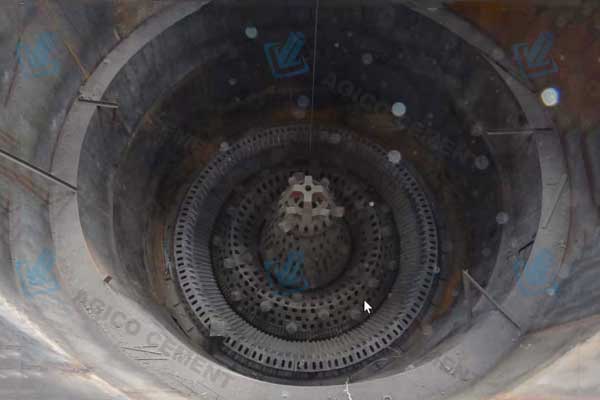
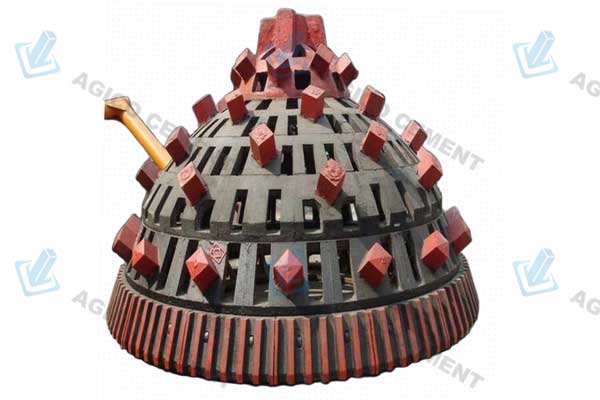
-An annular grate ring is designed around the central tower tip; driven by 2 small peripheral pinions, it rotates at a differential speed relative to the central tip (capable of both forward and reverse rotation). This design expands the total discharge cross-sectional area (creating 2–3 annular discharge openings) and reduces the size of individual discharge apertures, resulting in finer output particles. This facilitates rapid clinker cooling and promotes the digestion of free calcium oxide (FCaO), further enhancing cement stability.
-The rotational speeds of both the central tower tip and the annular grate ring are adjustable (via variable-speed motors) and reversible, ensuring a uniform descent of the material bed and a stable "base fire." The system also provides a crushing function for the clinker; the crushed material enters a conical hopper where it undergoes rapid water-spray cooling. This process not only yields high-strength clinker but also further reduces FCaO content, thereby improving soundness and the product pass rate. - Multi-segment Design of Main Parts: the central tower, annular grate ring, and large gear feature a multi-layer, multi-segment, and split-assembly design. This design reduces the weight of individual parts, facilitating easier manufacturing and installation; furthermore, the large discharge area and low rotational speed reduce gear wear.
- Multi-Tunnel Air Flow Design: A combined ventilation system is employed, featuring uniform airflow distribution, realized by multiple ducts from side air chambers toward the central tower and the base of the annular grate ring, alongside supplementary airflow at the mid-section. This effectively eliminates uneven ventilation within the kiln, enhances clinker-firing efficiency, and reduces heat consumption during firing.
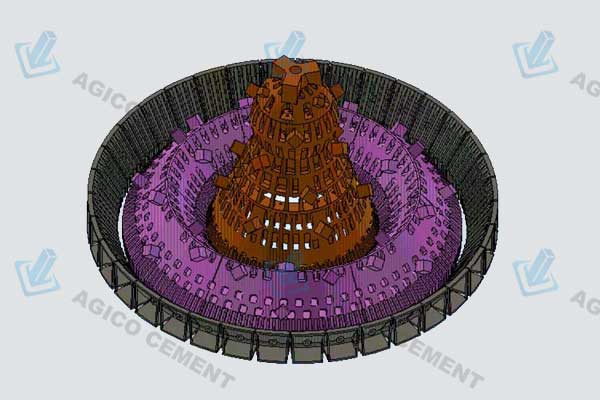 Main Parts of Mechanical Vertical Shaft Kiln
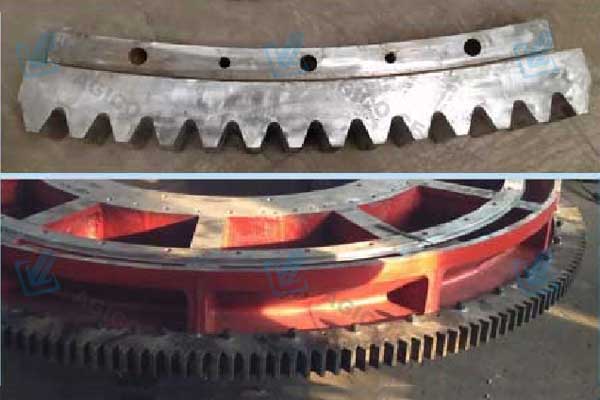 Segmented Gear Parts
How a Mechanical Vertical Shaft Kiln Works
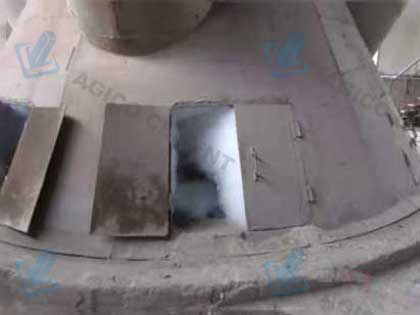 Mechanical VSK Kiln Operation
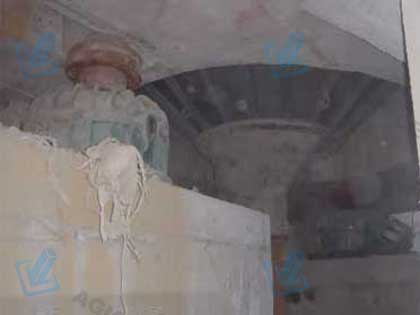 Mechanical VSK Kiln During Operation
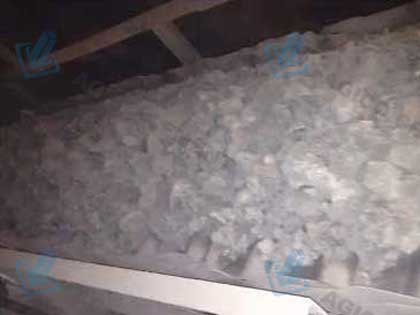 Mechanical VSK Kiln Cement Production
The difference in the operational process between the mechanical vertical kiln and traditional vertical shaft kiln is the revolutionary differential-speed discharging method. This innovation addresses the "wall effect" and makes the production process more uniform and efficient.
Mechanical Vertical Shaft Kiln vs Rotary Kiln
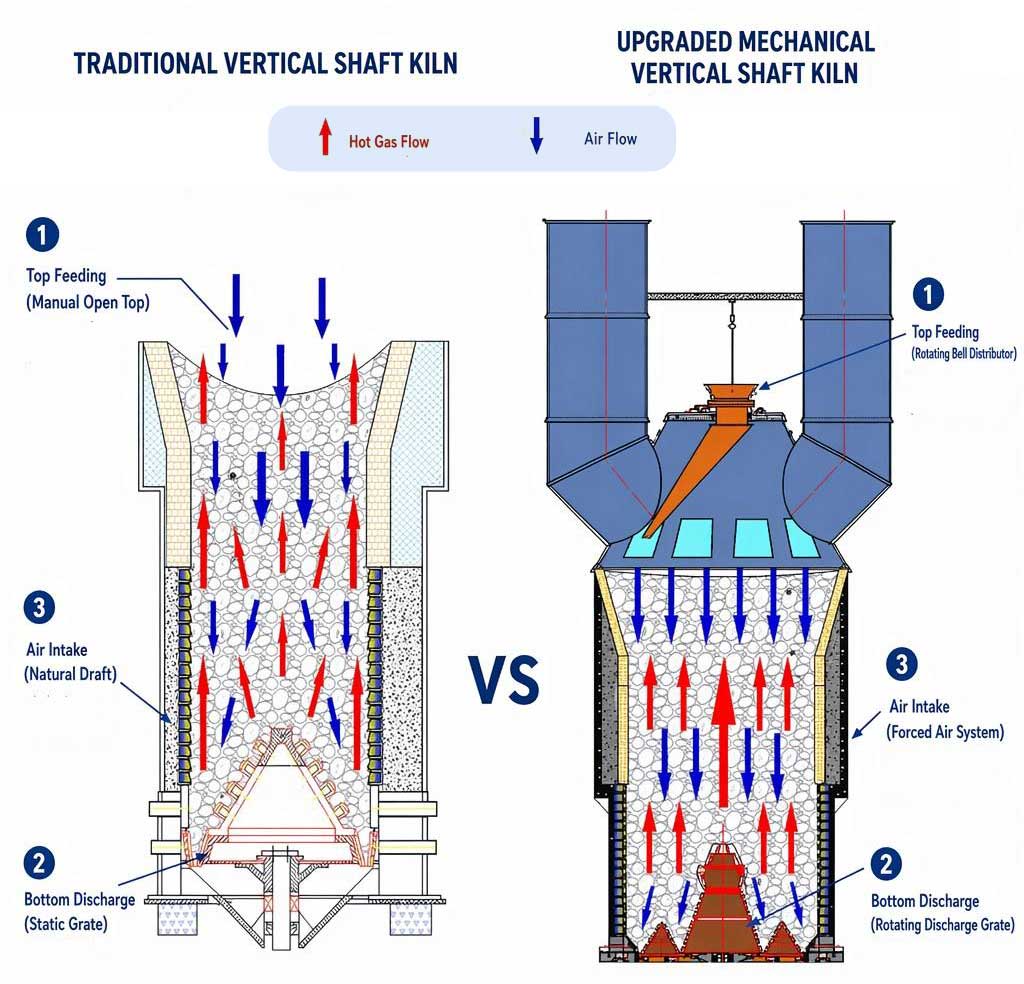
Traditional and Upgraded Vertical Shaft Kiln Working Principle Compare
| Feature | Traditional VSK | Upgraded Mechanical VSK |
|---|---|---|
| Top Feeding | Manual / Open Top (Uneven distribution) | Rotating Bell Distributor (Uniform & Sealed) |
| Bottom Discharge | Static Grate (Manual removal, batch) | Rotating Discharge Grate (Continuous & Auto) |
| Air Supply | Natural Draft (Low pressure, low efficiency) | Forced Air System (High pressure, optimized flow) |
| Heat Efficiency | 50% - 60% | >80% |
| Operation | Labor-intensive, unstable quality | PLC Controlled, stable high-quality output |
Why Choose Our Mechanical Vertical Shaft Kiln?
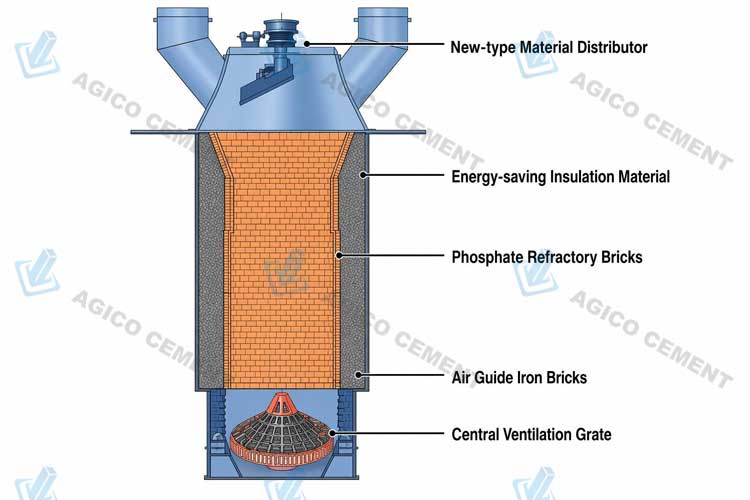
AGICO offers customized manufacturing of vertical shaft kilns for cement production; we also offer upgrading solutions for your existing vertical shaft kilns. Manufacturing Cement production plants utilizing mechanized vertical cement kilns with giant-gyration differential discharge systems feature the following characteristics:
- Energy savings (including both thermal and electrical energy);
- Ease of environmental compliance;
- Reduced investment costs;
- Land conservation;
- Simplified management;
- Short construction periods;
- Suitability for upgrading outdated production lines (kiln types);
- Suitability for constructing cement production lines in remote, underdeveloped, or resource-constrained regions.
Mechanical Vertical Shaft Kiln Features
- High heat exchange efficiency: During the clinker firing process, raw meal and coal are mixed for combustion. This process offers superior heat transfer efficiency compared to other kiln types; for the material nodules burn and heat up simultaneously to form clinker in a natural state, the sintering process features optimal conditions such as thermal conductivity, combustion, and high-temperature reactions.
- Small footprint and low investment: Mechanical Vertical Shaft Kiln systems cost less for clinker production and occupy less land. Preliminary estimates indicate that for the same production capacity, the footprint is only one-tenth that of a rotary kiln; as a result, the equipment manufacturing and plant construction period is shorter, offering customers high investment efficiency.
- Simple control and management: Modern dry-process rotary kilns place extremely high demands on control and management personnel, typically requiring about 20 engineering and technical staff to undergo 2 to 3 months of training before assuming their roles. In contrast, vertical kilns can be operated by general personnel, requiring only 10 to 20 days of training.
FAQ of Mechanical Vertical Shaft Kilns
-
What fuels can be used for a mechanical vertical shaft kiln?
A:The kiln has strong fuel flexibility. Optional fuels include various coals; the coal grade has a major influence on the finished clinker quality. -
What is the production capacity range of a vertical shaft kiln?
A: Capacity varies widely from 1000 t/d to 2,500 tonnes per day (t/d). Vertical shaft kiln diameters range from 5 to 8 metres. -
What raw materials are suitable for a mechanical vertical shaft kiln to process?
A: It is primarily designed for calcining different qualities of cement clinker from raw meal used in cement production, if you want high-quality clinker, use better raw materials. -
What are the advantages of this upgraded VSK over ordinary VSK?
A: Key benefits include: higher output and better clinker quality through differential discharge technology; effective elimination of the “core drawing” problem (uneven center falling); lower energy consumption; enables larger kiln diameters; can upgrade traditional vertical shaft kilns (diameter 3.5–6 m) into differential ones. -
How long does it take for installation of a mechanical vertical shaft kiln?
A: The timeline depends on kiln size, site conditions, and construction efficiency – a standard sized VSK installation can be completed within 6 months. -
Can the cement vertical shaft kiln be customized?
A: Yes. AGICO offers full customisation, including process design, equipment fabrication, installation, and commissioning. Upgrading existing ordinary VSK to upgraded version is also available. -
What automation systems are available?
A: The automation systems of vertical shaft kiln include: PLC systems for batching and automatic weighing; industrial PC (microcomputer) control for feeding; intelligent control to stabilise thermal regime; touch‑screen human‑machine interfaces. -
What is the service life of a vertical shaft kiln?
A: Usually, our upgraded version of VSK can be used for 5-8 years, which is decided by material type and quality, operating environment, and maintenance. For example, refractory linings wear out at different rates in different zones, and bottom bearings are prone to damage under high temperature and dust. -
How is the finished cement quality of vertical shaft kiln?
A: When using the same raw materials, the finished cement product has 2 point less hardness than the cement produced by rotary kiln. If the hardness of cement produced by rotary kiln is 54, the hardness of cement of VSK is 52. -
Do you provide turnkey cement plant solutions?
A: Yes. AGICO offer complete turn‑key (EPC) services, covering process design, equipment manufacturing, installation, commissioning, staff training, and technical support – delivering a fully operational production line.