
Cast Steel Balls
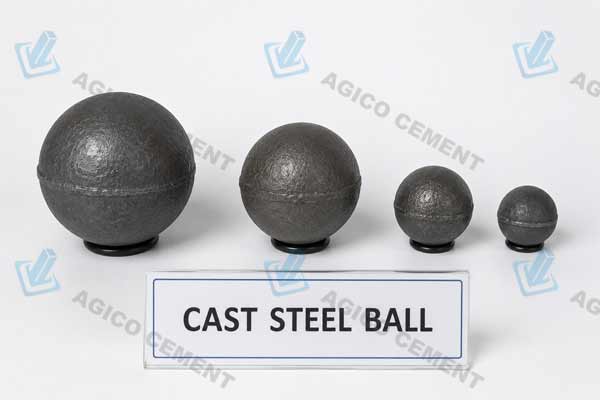
CAST STEEL BALL DETAILS:
Low, medium and high-chrome cast steel balls are supplied from AGICO at a wide size range, featuring high wear resistance and great impact resistance. We can supply cast steel balls suitable for both ball mills and SAG mills, covering steel grinding ball diameter range from 8 to 130 mm.
- Product: Cast Steel Ball, chrome steel balls
- Production Method: Casting
- Ball Types: Low chrome grinding ball, high chrome grinding ball
- Ball Size Range: φ 8 mm–130 mm
- Hardness: 58–65 HRC
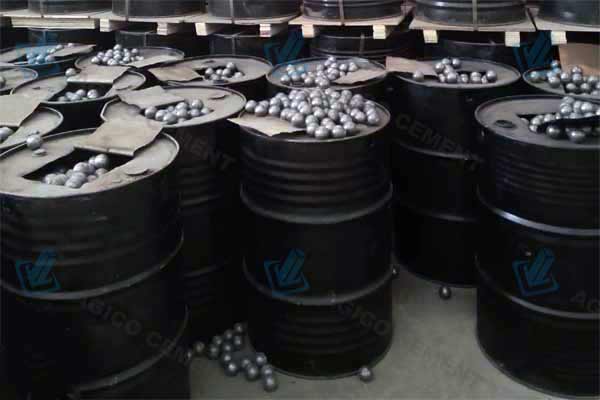
- Packaging: tone bags, or steel drums
Cast Steel Balls for Grinding Applications
What are cast steel balls and where are they used? Cast steel balls are grinding media for ball mills and SAG mills, produced by melting scrap steel and different proportions of alloy elements such as chrome, and pour the mixture into the ball molds. They are the key member in powder grinding and ultrafine deep processing in industries such as cement building materials, metal mines, and coal slurry thermal power.
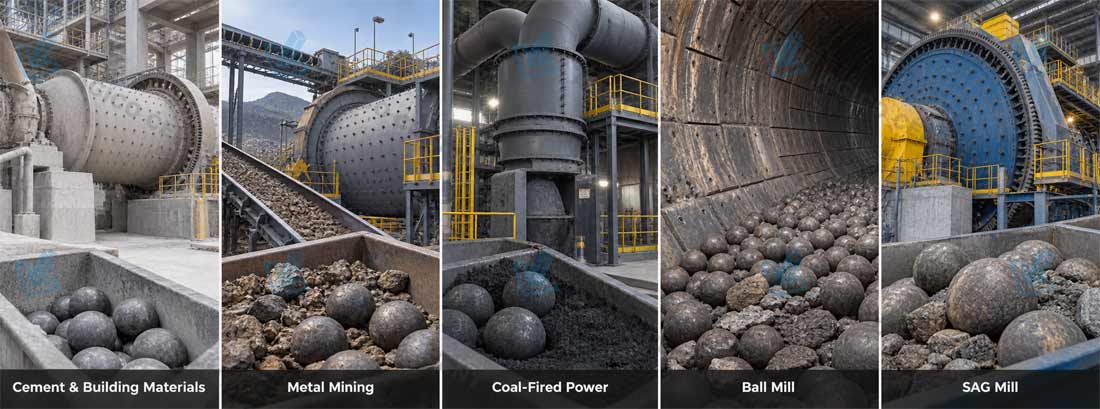
Cast Steel Ball Types
Cast steel balls are available in low-, medium-, and high-chromium grades. Each grade offers a different balance of hardness, impact resistance, wear performance, and cost.
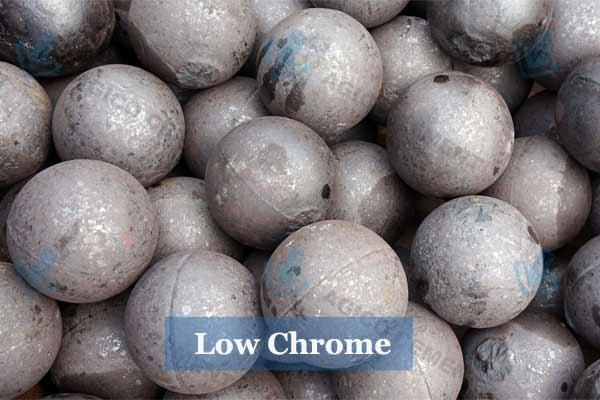
LOW CHROME CAST STEEL BALLS (HRC45-52)
- Hardness range: 45–52 HRC
- Chromium content: 0.5–2.5%
- Carbon content: 1.80–3.20%
- Minimum impact value: 1.5 J/cm²
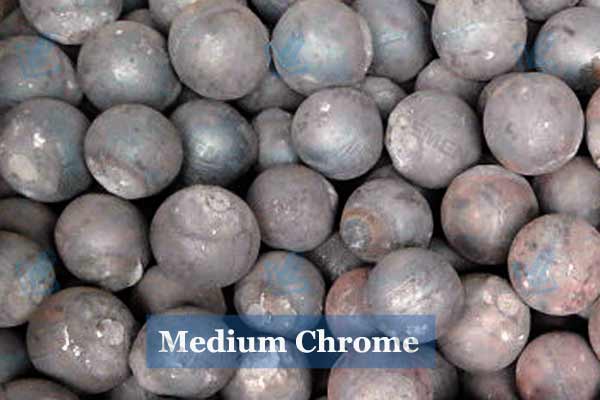
MEDIUM CHROME CAST STEEL BALLS (HRC47-55)
- Hardness range: 47–55 HRC
- Chromium content: 3.0–7.0%
- Carbon content: 1.80–3.20%
- Minimum impact value: 2.0 J/cm²
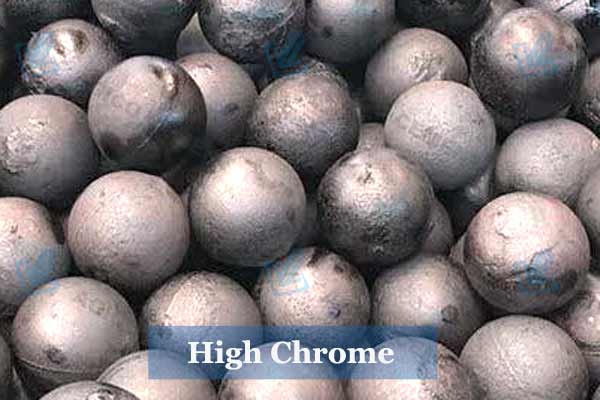
HIGH CHROME CAST STEEL BALLS (HRC56-62)
- Hardness range: 56–62 HRC
- Chromium content: ≥10.0%
- Carbon content: 1.80–3.20%
- Minimum impact value: 3.0 J/cm²
Why Choose Cast Steel Balls from AGICO
- High Wear Resistance: AGICO cast steel balls shows high wear resistance and uniform hardness, for its’ production has strict control over stable alloy composition and heat treatment processes, help reduce the consumption of grinding media.
- Low Breakage Rate: Our cast steel ball product has low risk of breakage, spalling, and loss of roundness, it high standard quality management over the raw material, casting process and heat-treatment.
- Consistent Size and Shape: Cast steel balls are produced under controlled casting and finishing processes to maintain consistent diameter, dimensional tolerance and spherical shape.
- Application-Specific Solution: AGICO offers professional advices of cast steel balls based on your mill type, material hardness, feed particle size, and wet or dry grinding conditions.
Chemical Composition of Cast Steel Balls
| Cast Steel Ball Type | C | Si | Mn | Cr | Mo | Cu | P | S |
|---|---|---|---|---|---|---|---|---|
| Low-chromium | 2.2-3.5 | ≤1.2 | ≤1.5 | 0.8-3.5 | ≤1.0 | ≤0.5 | ≤0.15 | ≤0.15 |
| Medium-chromium | 2.0-3.3 | ≤1.2 | ≤1.8 | 4.0-9.0 | ≤1.5 | ≤1.0 | ≤0.15 | ≤0.15 |
| High-chromium | 1.6-3.3 | ≤1.0 | ≤2.5 | 10-18 | ≤1.0 | ≤1.5 | ≤0.10 | ≤0.10 |
| Super high-chromium | 2.0-3.3 | ≤1.0 | ≤2.5 | 22-25 | <2.0 | ≤1.5 | ≤0.10 | ≤0.10 |
Mechanical Properties of Cast Steel Balls
| Model | HRC | The degree of ball-drop | Metallurgical structure |
|---|---|---|---|
| Low-chromium casting strip | ≥45 | ≥8000 | P+C |
| Medium-chromium casting strip | ≥50 | ≥12000 | P+C |
| High-chromium casting strip | ≥58 | ≥15000 | M+C |
How are Cast Steel Balls Produced
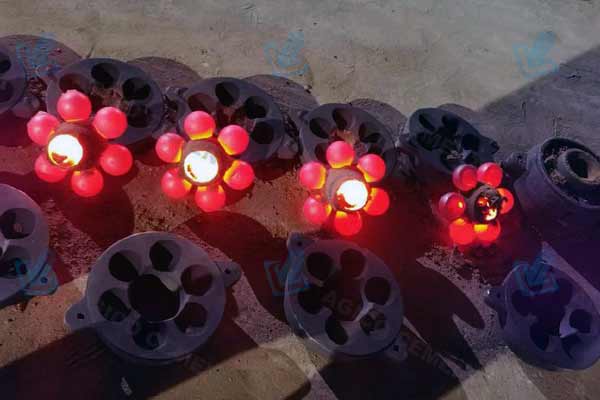
- Raw Material Inspection: Inspect scrap steel, chromium alloys, and other alloy materials to ensure raw material quality.
- Alloy Proportioning: Adjust the furnace charge ratio based on cast steel ball model, such as chromium and carbon content.
- Medium-Frequency Furnace Melting: Scrap steel is melt in a medium-frequency electric furnace, and chrome metal is added in this step.
- Steel Ball Mold Casting: Choose metal mold or sand mold casting according to the designed quality requirement.
- Quenching and Tempering: formed steel balls go through high-temperature quenching and tempering, this is to make the steel balls to achieve required hardness and wear resistance, and reducing casting stresses.
Quality Inspection
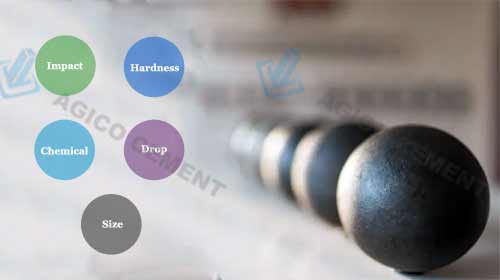
To ensure consistent product quality, cast steel balls are inspected for impact resistance, hardness, chemical composition, surface hardness and internal quality.
- Chemical composition analysis
- Diameter and dimensional inspection
- Surface hardness testing
- Core hardness testing
- Drop testing
- Impact toughness testing
- Metallographic examination
- Internal defect inspection
- Packaging and batch traceability
Each product batch is traceable via heat number, production batch, or inspection records.
How To Make A Quotation of Cast Steel Ball
If you're unsure which cast steel balls to select, please send us the following information, and our engineering team will recommend the best solution for your project.
- Mill type
- Mill diameter and length
- Rotation speed
- Wet or dry grinding
- Material type
- Feed size
- Product fineness
- Current ball diameter and grade
- Current media consumption
- Desired production capacity
Cast Steel Balls vs Forged Steel Balls
Both cast and forged steel balls are used for various grinding mills, your selection should be based on the mill's operating conditions, material properties, and comprehensive usage costs. Here is a comparison table of both grinding steel balls:
| Comparison | Cast Steel Balls | Forged Steel Balls |
|---|---|---|
| Manufacturing Method | Casting and heat treatment | Forging or rolling and heat treatment |
| Alloy Flexibility | various chromium contents and alloy compositions | Carbon or alloy steel |
| Wear Resistance | Higher Chorme – Higher wear resistance | Depended by steel and heat-treatment |
| Impact Resistance | Choose according to project requirement | high-impact applications |
| Typical Applications | Cement mills and selected mining mills | Mining mills and high-impact applications |
| Selection Basis | Abrasion, impact and total grinding cost | Impact load, wear rate and mill conditions |